
数据结构 模拟实现LinkedList单向不循环链表
温馨提示:这篇文章已超过413天没有更新,请注意相关的内容是否还可用!
目录
一、链表的简单介绍
二、链表的接口
三、链表的方法实现
(1)display方法
(2)size得到单链表的长度方法
(3)addFirst头插方法
(4)addLast尾插方法
(5)addIndex指定位置插入方法
(6)contains方法
(7)remove删除第一个key值节点的方法
(8)removeAllKey删除所有值为key的方法
(9)clear方法
四、最终代码
一、链表的简单介绍
概念:链表是一种物理存储结构不连续,逻辑上是连续的;链表类似现实中的火车,一节车厢连着一节车厢,而链表是通过链表之间的引用进行连接,构成一节一节的数据结构。如图:


二、链表的接口
代码如下:
public interface Ilist {
    //头插法
    void addFirst(int data);
    //尾插法
    void addLast(int data);
    //任意位置插入,第一个数据节点为0号下标
    void addIndex(int index,int data);
    //查找是否包含关键字key是否在单链表当中
    boolean contains(int key);
    //删除第一次出现关键字为key的节点
    void remove(int key);
    //删除所有值为key的节点
    void removeAllKey(int key);
    //得到单链表的长度
    int size();
    void clear();
    void display();
}
三、链表的方法实现
创建一个类,实现接口,重写方法,链表中的方法都在里面实现。类里面有链表类,也是内部类,有val值,next域,还有记录第一个节点的头结点,代码如下:
public class MyLinkedList implements Ilist{
    public ListNode head;
    static class ListNode{
        int val;
        ListNode next;
        public ListNode(int val) {
            this.val = val;
        }
    }
}
我们先创建一个方法,方法里面会创建几个节点,代码如下:
public void createList() {
        ListNode node1 = new ListNode(12);
        ListNode node2 = new ListNode(23);
        ListNode node3 = new ListNode(34);
        ListNode node4 = new ListNode(45);
        ListNode node5 = new ListNode(56);
        node1.next = node2;
        node2.next = node3;
        node3.next = node4;
        node4.next = node5;
        this.head = node1;
    }
调用这个方法,就会创建出含有5个节点的链表,在test类里面创建main方法,调用此方法后的结果,结果如图:

(1)display方法
此方法可以显示链表中所有元素,也就是遍历一遍链表,打印val值,代码如下:
public void display() {
        ListNode cur = head;
        while (cur != null) {
            System.out.print(cur.val + " ");
            cur = cur.next;
        }
        System.out.println();
    }
调用该方法执行结果如下: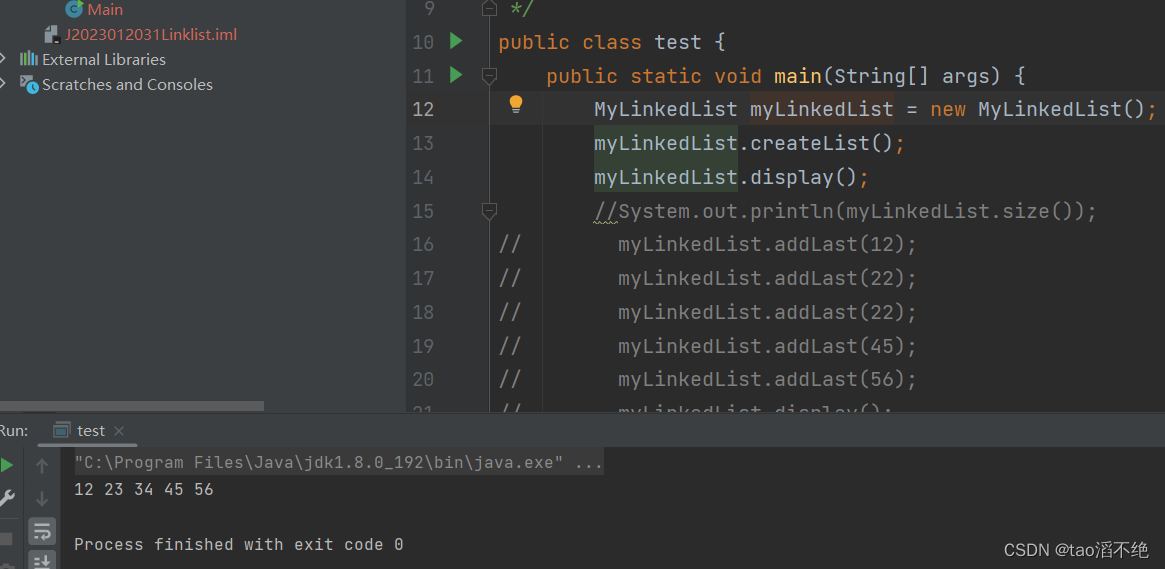
(2)size得到单链表的长度方法
要得到链表的长度,就要遍历一遍链表,定义一个变量进行统计个数,代码如下:
public int size() {
        int count = 0;
        ListNode cur = head;
        while (cur != null) {
            count++;
            cur = cur.next;
        }
        return count;
    }
执行结果:

(3)addFirst头插方法
头插就要把要插入的节点当做头结点,要插入的元素next域指向当前头结点,再把头结点定成插入的元素。
代码:
public void addFirst(int data) {
        ListNode node = new ListNode(data);
        if(this.head == null) {
            this.head = node;
        } else {
            node.next = this.head;
            this.head = node;
        }
    }
调用此方法,多条语句后的执行结果如下:
(4)addLast尾插方法
尾插就是要在链表的尾节点后插入节点,代码如下:
public void addLast(int data) {
        ListNode node = new ListNode(data);
        if(this.head == null) {
            this.head = node;
        } else {
            ListNode cur = this.head;
            while (cur.next != null) {
                cur = cur.next;
            }
            cur.next = node;
        }
    }
执行结果如下:

(5)addIndex指定位置插入方法
我们这里规定第一个节点的位置是0,第二个节点位置为1,依次往后推,我们要指定某一位置插入节点,先要检查插入位置是否合法,不合法抛出异常;合法在指定位置插入节点,如果指定位置是0,就是头插,指定位置是节点个数的size,就是尾插;中间位置,我们要找到指定位置的前一个节点,插入节点的next域指向前一个节点的next节点,前一个节点的next域指向插入节点,代码如下:
    public void addIndex(int index, int data) {
        try {
            if(index  size()) {
                throw new IndexException("下标异常,下标:" + index);
            } else {
                if(index == 0) {
                    //头插
                    addFirst(data);
                    return;
                }
                if (index == size()) {
                    //尾插
                    addLast(data);
                    return;
                }
                ListNode node = new ListNode(data);
                ListNode cur = searchPrev(index);
                node.next = cur.next;
                cur.next = node;
            }
        } catch (IndexException e) {
            e.printStackTrace();
        }
    }
    //找到链表前一个的位置
    private ListNode searchPrev(int index) {
        ListNode cur = this.head;
        int count = 0;
        while (count != index - 1) {
            cur = cur.next;
            count++;
        }
        return cur;
    }
public class IndexException extends RuntimeException{
    public IndexException(String e) {
        super(e);
    }
}
(6)contains方法
查找是否包含关键字key是否在单链表当中,遍历一遍链表,有该元素就返回true,没有就返回false,代码如下:
public boolean contains(int key) {
        ListNode cur = this.head;
        while (cur != null) {
            if(cur.val == key) {
                return true;
            }
            cur = cur.next;
        }
        return false;
    }
(7)remove删除第一个key值节点的方法
删除一个节点,先要判断该链表为不为空,为空就退出;不为空,看要删的节点是不是头结点,是头结点就直接把头结点改成头结点的next域;要删除的节点可能在中间,就要扎到要删除节点的前一个节点,把前一个节点的next域指向要删除节点的next域就好了,代码如下:
public void remove(int key) {
        if(this.head == null) {
            //一个节点都没有,无法删除
            return;
        }
        if(this.head.val == key) {
            this.head = this.head.next;
            return;
        }
        ListNode cur = findPrev(key);
        if(cur == null) {
            System.out.println("没有要删除的点");
        } else {
            ListNode del = cur.next;
            cur.next = del.next;
        }
    }
    private ListNode findPrev(int key) {
        ListNode cur = this.head;
        while (cur.next != null) {
            if(cur.next.val == key) {
                break;
            }
            cur = cur.next;
        }
        return cur == this.head ? null : cur;
    }
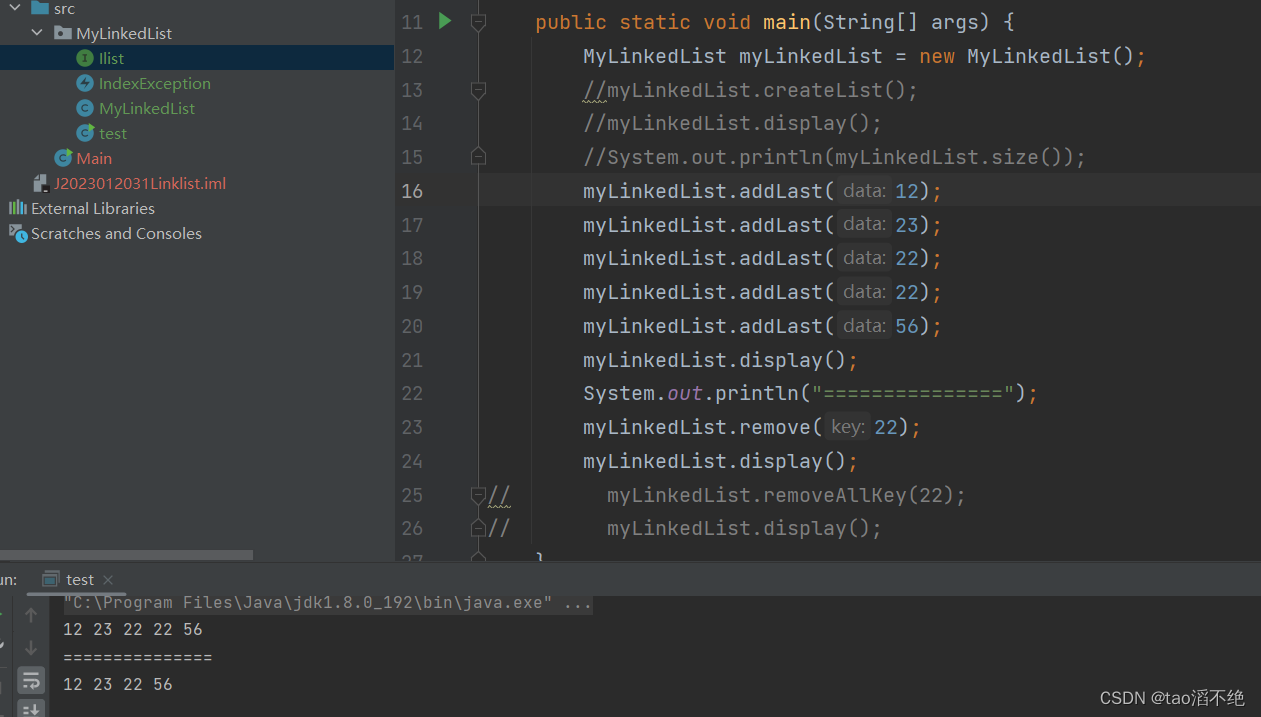
执行结果如下:
(8)removeAllKey删除所有值为key的方法
如果头结点是空的,就不用进行下面操作,直接返回。
两个节点,一个的前节点,一个是前节点的后一个节点,遍历后一个节点,判断后一个节点的val值是不是key,是key就把前一个节点的next域指向后一个节点的next域,后一个节点向后移,没有命中后一个节点==key这条件,前一个节点和后一个节点都要往后移动一步。
最后还要判断头结点的val值是否等于key值,是就要把head标记成head的next域。
代码入如下:
public void removeAllKey(int key) {
        if(this.head == null) {
            return;
        }
        ListNode prev = this.head;
        ListNode cur = this.head.next;
        while (cur != null) {
            if(cur.val == key) {
                prev.next =cur.next;
                cur = cur.next;
            } else {
                cur = cur.next;
                prev = prev.next;
            }
        }
        if(this.head.val == key) {
            this.head = this.head.next;
        }
    }
执行结果如下:

(9)clear方法
清除所有节点,有两种解决方案,第一种是直接把头结点设为空,这种方法比较暴力;第二种是把每个节点的next域设为空,同时val也要设为空,因为这里的val类型是int,所以就设置不了空了,最后再把head节点设为空,代码如下:
 public void clear() {
        ListNode cur = this.head;
        while (cur != null) {
            ListNode curNext = cur.next;
            cur.next = null;
            cur = curNext;
        }
        head = null;
    }
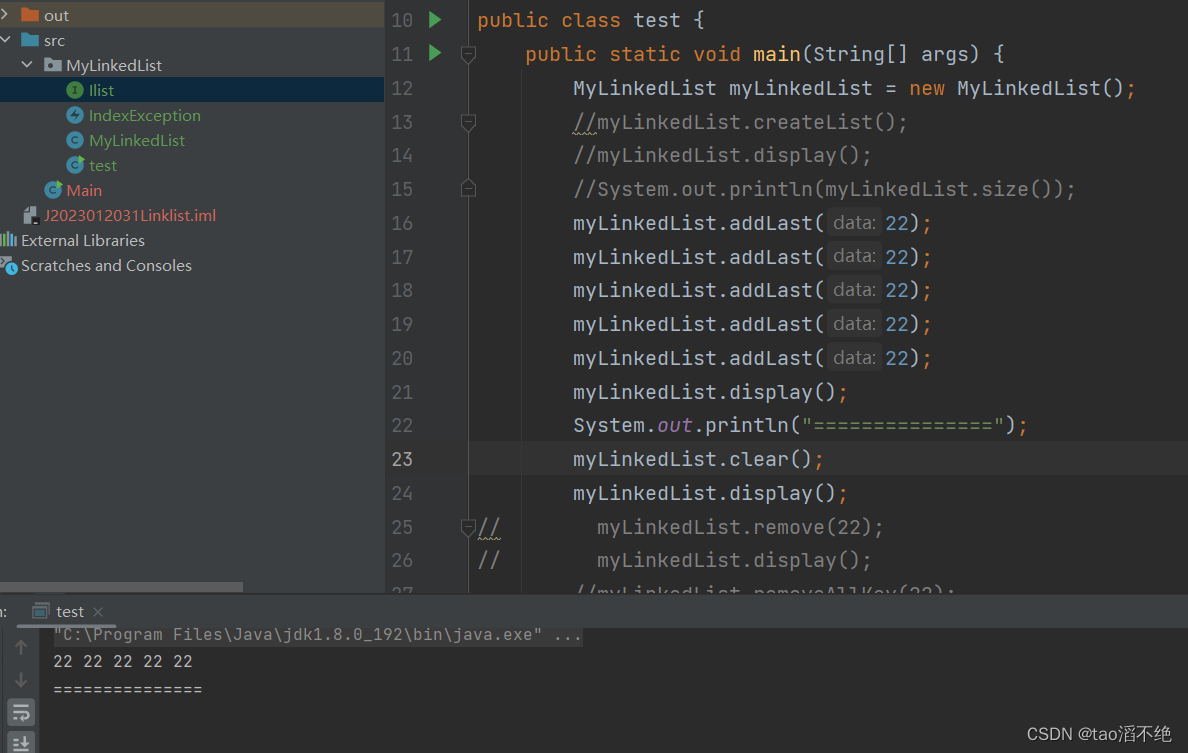
执行结果如下:
四、最终代码
public class MyLinkedList implements Ilist{
    public ListNode head;
    static class ListNode{
        int val;
        ListNode next;
        public ListNode(int val) {
            this.val = val;
        }
    }
    public void createList() {
        ListNode node1 = new ListNode(12);
        ListNode node2 = new ListNode(23);
        ListNode node3 = new ListNode(34);
        ListNode node4 = new ListNode(45);
        ListNode node5 = new ListNode(56);
        node1.next = node2;
        node2.next = node3;
        node3.next = node4;
        node4.next = node5;
        this.head = node1;
    }
    @Override
    public void addFirst(int data) {
        ListNode node = new ListNode(data);
        if(this.head == null) {
            this.head = node;
        } else {
            node.next = this.head;
            this.head = node;
        }
    }
    @Override
    public void addLast(int data) {
        ListNode node = new ListNode(data);
        if(this.head == null) {
            this.head = node;
        } else {
            ListNode cur = this.head;
            while (cur.next != null) {
                cur = cur.next;
            }
            cur.next = node;
        }
    }
    @Override
    public void addIndex(int index, int data) {
        try {
            if(index  size()) {
                throw new IndexException("下标异常,下标:" + index);
            } else {
                if(index == 0) {
                    //头插
                    addFirst(data);
                    return;
                }
                if (index == size()) {
                    //尾插
                    addLast(data);
                    return;
                }
                ListNode node = new ListNode(data);
                ListNode cur = searchPrev(index);
                node.next = cur.next;
                cur.next = node;
            }
        } catch (IndexException e) {
            e.printStackTrace();
        }
    }
    //找到链表前一个的位置
    private ListNode searchPrev(int index) {
        ListNode cur = this.head;
        int count = 0;
        while (count != index - 1) {
            cur = cur.next;
            count++;
        }
        return cur;
    }
    @Override
    public boolean contains(int key) {
        ListNode cur = this.head;
        while (cur != null) {
            if(cur.val == key) {
                return true;
            }
            cur = cur.next;
        }
        return false;
    }
    @Override
    public void remove(int key) {
        if(this.head == null) {
            //一个节点都没有,无法删除
            return;
        }
        if(this.head.val == key) {
            this.head = this.head.next;
            return;
        }
        ListNode cur = findPrev(key);
        if(cur == null) {
            System.out.println("没有要删除的点");
        } else {
            ListNode del = cur.next;
            cur.next = del.next;
        }
    }
    private ListNode findPrev(int key) {
        ListNode cur = this.head;
        while (cur.next != null) {
            if(cur.next.val == key) {
                break;
            }
            cur = cur.next;
        }
        return cur == this.head ? null : cur;
    }
    @Override
    public void removeAllKey(int key) {
        if(this.head == null) {
            return;
        }
        ListNode prev = this.head;
        ListNode cur = this.head.next;
        while (cur != null) {
            if(cur.val == key) {
                prev.next =cur.next;
                cur = cur.next;
            } else {
                cur = cur.next;
                prev = prev.next;
            }
        }
        if(this.head.val == key) {
            this.head = this.head.next;
        }
    }
    @Override
    public int size() {
        int count = 0;
        ListNode cur = head;
        while (cur != null) {
            count++;
            cur = cur.next;
        }
        return count;
    }
    @Override
    public void clear() {
        ListNode cur = this.head;
        while (cur != null) {
            ListNode curNext = cur.next;
            cur.next = null;
            cur = curNext;
        }
        head = null;
    }
    @Override
    public void display() {
        ListNode cur = head;
        while (cur != null) {
            System.out.print(cur.val + " ");
            cur = cur.next;
        }
        System.out.println();
    }
}
//自定义异常类
public class IndexException extends RuntimeException{
    public IndexException(String e) {
        super(e);
    }
}


