
【设计模式】行为型设计模式之 策略模式学习实践
介绍
策略模式(Strategy),就是⼀个问题有多种解决⽅案,选择其中的⼀种使⽤,这种情况下我们
使⽤策略模式来实现灵活地选择,也能够⽅便地增加新的解决⽅案。⽐如做数学题,⼀个问题的
解法可能有多种;再⽐如商场的打折促销活动,打折⽅案也有很多种,有些商品是不参与折扣活
动要按照原价销售,有些商品打8.5折,有些打6折,有些是返现5元等。
优缺点和场景
优点
- 完美符合开闭原则,可以再不修改原系统基础上选择算法行为,或者新增新的算法。
- 策略模式,将一类算法进行了抽象,可以将公共部分进行抽离。避免重复代码。
- 策略模式对算法的封装,将算法的责任和算法本身分割开,交给不同的对象管理。提供了可替换继承关系的办法,如果不用策略模式,那么环境类,可能自己就有多个子类了,算法和算法的使用还在一起,那就不符合开闭原则。
- 可以避免多重条件选择语句。
- 算法抽离后,更方便不同的环境类复用。
缺点
- 客户端必须知道所有的策略类,并且决定使用哪一个。
- 造成了很多具体的策略的类,细小的变化都需要增加新的具体策略类。
使用场景
- 系统需要动态的在某些算法里进行选择,那么使用策略模式,用户只要维持一个算法的抽象类对象即可。
- 一个对象有很多的行为,避免在一个类里,根据不同的条件进行多重条件判断时。(if(a) 行为a if(b)行为b 将a和b拆成两个具体类。) 可以使用策略模式,将不同的行为,抽象成具体的策略类。
- 需要将具体的算法实现,和使用者进行解耦,提高算法的保密性和安全性。
结构
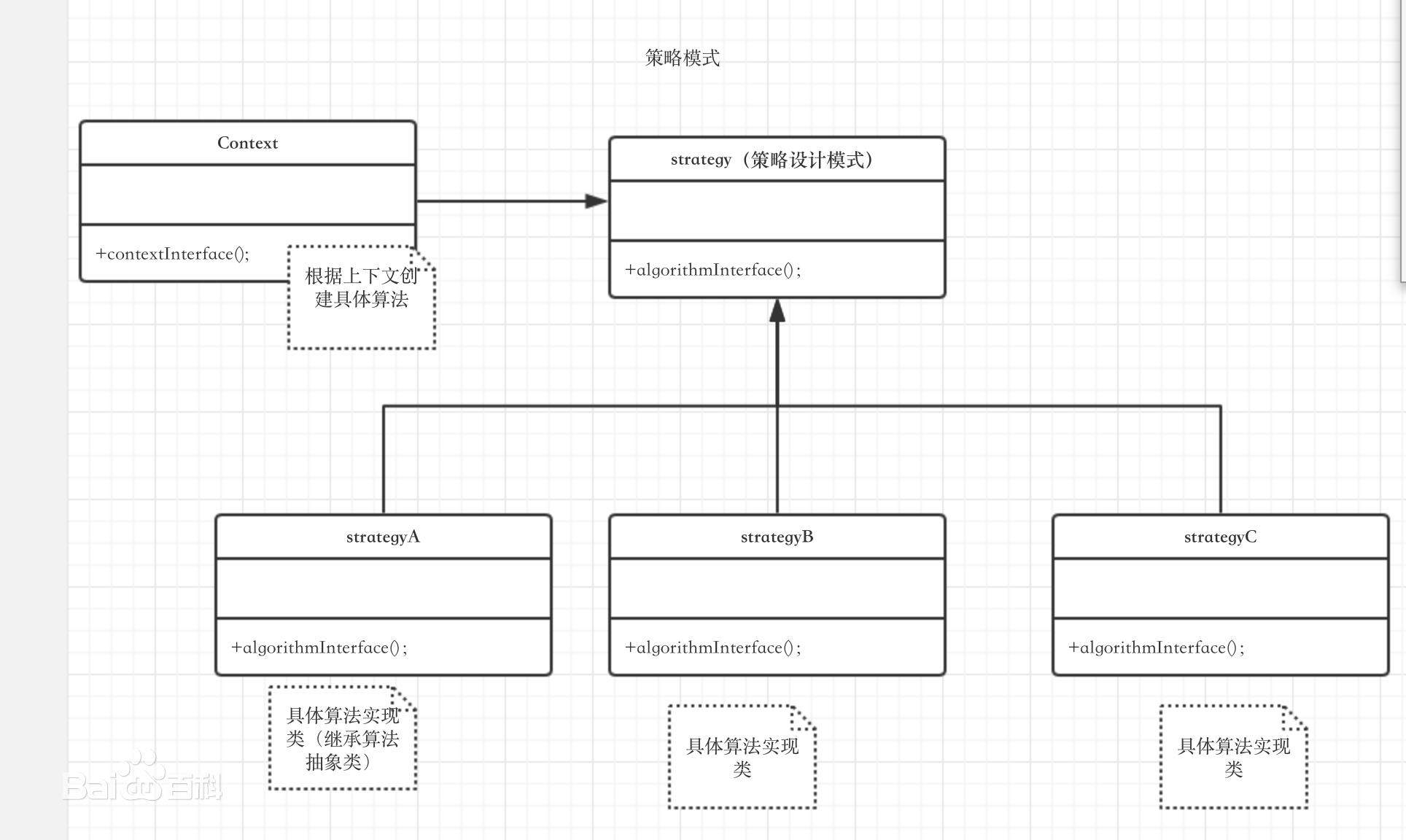
略模式对算法的封装,将算法的责任和算法本身分割开,交给不同的对象管理。使用算法的上下文环境类中,针对抽象的策略类进行编程。符合依赖倒转原则,并且出现了新的算法时,只需要增加一个新的实现即可。
- **策略(Strategy) **定义所有⽀持算法的公共接⼝。 Context 使⽤这个接⼝来调⽤某 ConcreteStrategy 定义的算法。
- **策略实现(ConcreteStrategy) **实现了Strategy 接⼝的具体算法
- **上下⽂环境(Context) **维护⼀个 Strategy 对象的引⽤,⽤⼀个 ConcreteStrategy 对象来装配可定义⼀个接⼝⽅法让 Strategy 访问它的数据
UML类图
基础案例
针对不同商品的打折算法,在引入策略模式前,由一个算法类的方法维护,包含大量的条件转移,并且也不利于维护。
代码下载:strategy.zip
引入策略模式前
引入策略模式前,不同的打折算法的计算过程存在的问题。
- 有多重条件选择语句,代码混乱
- 不同的算法没有办法进行在别处复用
- 新增算法的话,需要修改原来的代码,不符合开闭原则。
package behavioralPattern.strategy;
import java.text.MessageFormat;
/**
 * 引入策略模式前,不同的打折算法的计算过程
 * 1.有多重条件选择语句,代码混乱
 * 2.不同的算法没有办法进行在别处复用
 * 3.新增算法的话,需要修改原来的代码,不符合开闭原则。
 *
 * @author liuyp
 * @date 2022/09/25
 */
public class BuyGoods {
    private String goods;
    private double price;
    private double finalPrice;
    private String desc;
    public BuyGoods(String goods, double price) {
        this.goods = goods;
        this.price = price;
    }
    public double calculate(String discountType) {
        if ("discount85".equals(discountType)) {
            finalPrice = price * 0.85;
            desc = "该商品可享受8.5折优惠";
        } else if ("discount6".equals(discountType)) {
            finalPrice = price * 0.6;
            desc = "该商品可享受6折优惠";
        } else if ("return5".equals(discountType)) {
            finalPrice = price >= 5 ? price - 5 : 0;
            desc = "该商品可返现5元";
        } else {
            finalPrice = price;
            desc = "对不起,该商品不参与优惠活动";
        }
        System.out.println(MessageFormat.format("您购买的商品为:{0},原价为: {1},{2},最终售卖价格为:{3}", goods, price, desc, finalPrice));
        return finalPrice;
    }
}
引入策略模式
修改步骤
- 策略: 引入抽象类,所有的价格计算算法实现该抽象类。
- 策略实现:针对原有的if else中的价格计算算法,分别在一个个具体的策略实现类中进行实现。
- 环境类:购买商品的类中,只需要维护一个策略抽象类的引用即可,传入不通风策略实现,即可实现不同的打折策略。
抽象打折策略
/**
 * 策略模式中,对策略的抽象层。
 * 抽象出了公共的描述、价格属性。
 * 定义了需要子类实现的,具体的打折策略方法。
 *
 * @author StoneYu
 * @date 2022/09/25
 */
public abstract class AbstractDiscount {
    protected double finalPrice;
    protected String desc;
    public AbstractDiscount(String desc) {
        this.desc = desc;
    }
    public double getFinalPrice() {
        return finalPrice;
    }
    public void setFinalPrice(double finalPrice) {
        this.finalPrice = finalPrice;
    }
    public String getDesc() {
        return desc;
    }
    public void setDesc(String desc) {
        this.desc = desc;
    }
    public abstract double discount(double price);
}
拆分各个打折策略的实现
public class Discount6 extends AbstractDiscount {
    public Discount6() {
        super("该商品可享受6折优惠");
    }
    @Override
    public double discount(double price) {
        finalPrice = price * 0.6;
        return finalPrice;
    }
}
public class Discount85 extends AbstractDiscount {
    public Discount85() {
        super("该商品可享受8.5折优惠");
    }
    @Override
    public double discount(double price) {
        finalPrice = price * 0.85;
        return finalPrice;
    }
}
public class NoDiscount extends AbstractDiscount {
    public NoDiscount() {
        super("对不起,该商品不参与优惠活动");
    }
    @Override
    public double discount(double price) {
        finalPrice = price;
        return finalPrice;
    }
}
public class Return5 extends AbstractDiscount {
    public Return5() {
        super("该商品可返现5元");
    }
    @Override
    public double discount(double price) {
        this.finalPrice = price >= 5 ? price - 5 : 0;
        return finalPrice;
    }
}
修改环境类,只需要维护策略的引用
/**
 * 策略模式-环境类
 * 使用策略模式优化后的购买商品的方法
 * 1.没有了各种if-else
 * 2.不需要关注算法的具体实现,只需要维护一个策略的抽象类引用。符合依赖倒转原则
 *
 * @author StoneYu
 * @date 2022/09/25
 */
public class BuyGoods {
    private String goods;
    private double price;
    private AbstractDiscount abstractDiscount;
    public BuyGoods(String goods, double price, AbstractDiscount
            abstractDiscount) {
        this.goods = goods;
        this.price = price;
        this.abstractDiscount = abstractDiscount;
    }
    public double calculate() {
        double finalPrice = abstractDiscount.discount(this.price);
        String desc = abstractDiscount.getDesc();
        System.out.println(MessageFormat.format("商品:{0},原价:{1},{2},最 终价格为:{3}", goods, price, desc, finalPrice));
        return finalPrice;
    }
}
Spring中实践
新建策略接口
public interface DiscountStratege {
    /**
     * 折扣方法
     */
    void discount();
}
具体的策略 1
/**
 * 具体策略实现1
 *
 * @author LiuYuping
 * @date 2024/03/14 15:14
 */
@Component
public class FullReductionDiscountStratege implements DiscountStratege{
    @Override
    public void discount() {
        System.out.println("满减策略,满一百减100");
    }
}
具体策略 2
/**
 * 具体策略实现2
 *
 * @author LiuYuping
 * @date 2024/03/14 15:15
 */
@Component
public class WeekDayDiscountStratege implements DiscountStratege{
    @Override
    public void discount() {
        System.out.println("这里是周末满减策略");
    }
}
策略枚举,保存所有策略名称
public enum DiscountStrategeEnum {
    WEEK_DAY_STRATEGE("fullReductionDiscountStratege","满一百减一百"),
    FULL_REDUCTION("weekDayDiscountStratege","周末满减策略");
    String concernedStrategeBeanId;
    String strategeName;
    DiscountStrategeEnum(String concernedStrategeBeanId, String strategeName) {
        this.concernedStrategeBeanId = concernedStrategeBeanId;
        this.strategeName = strategeName;
    }
    public String getConcernedStrategeBeanId() {
        return concernedStrategeBeanId;
    }
    public String getStrategeName() {
        return strategeName;
    }
}
策略 Context 保存所有策略 Bean 示例
@Service
public class DiscountStrategeContext {
    @Autowired
    private Map allDiscountStrategeMap;
    /**
     * 获取指定的策略
     *
     * @param discountStrategeEnum 折扣策略枚举
     * @return {@link DiscountStratege}
     */
    public DiscountStratege getStratege(DiscountStrategeEnum discountStrategeEnum){
        return allDiscountStrategeMap.get(discountStrategeEnum.getConcernedStrategeBeanId());
    }
}
用例
在需要使用策略的地方,按需注入指定类型的策略对象,新增策略时不需要修改原有代码
@SpringBootTest
class DemoApplicationTests {
    @Autowired
    DiscountStrategeContext discountStrategeContext;
    @Test
    void testDiscountStratege() {
        DiscountStratege stratege = discountStrategeContext.getStratege(DiscountStrategeEnum.WEEK_DAY_STRATEGE);
        stratege.discount();
    }
}
免责声明:我们致力于保护作者版权,注重分享,被刊用文章因无法核实真实出处,未能及时与作者取得联系,或有版权异议的,请联系管理员,我们会立即处理! 部分文章是来自自研大数据AI进行生成,内容摘自(百度百科,百度知道,头条百科,中国民法典,刑法,牛津词典,新华词典,汉语词典,国家院校,科普平台)等数据,内容仅供学习参考,不准确地方联系删除处理! 图片声明:本站部分配图来自人工智能系统AI生成,觅知网授权图片,PxHere摄影无版权图库和百度,360,搜狗等多加搜索引擎自动关键词搜索配图,如有侵权的图片,请第一时间联系我们,邮箱:ciyunidc@ciyunshuju.com。本站只作为美观性配图使用,无任何非法侵犯第三方意图,一切解释权归图片著作权方,本站不承担任何责任。如有恶意碰瓷者,必当奉陪到底严惩不贷!


